Trisolaran Civilization
A civilization born of chaos, shaped by extinction, and driven by one imperative: survive.

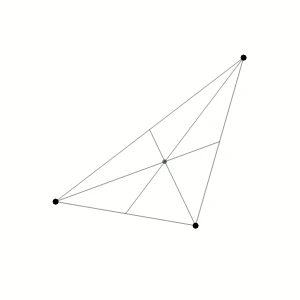
The Trisolaran Civilization is the extraterrestrial species at the heart of Liu Cixin's Three-Body Problem trilogy. Hailing from a star system governed by the chaotic gravitational dance of three suns, their world has endured countless cycles of annihilation and rebirth over millions of years. This relentless existential pressure forged a culture defined above all by survival, and it is this same pressure that ultimately drove them to set their sights on the stable, single-star world of Earth.
In the narrative, the Trisolarans serve as the primary antagonist force: a civilization whose technological capabilities rival or slightly exceed humanity's, whose political machinery is geared toward collective survival, and whose invasion of the Solar System constitutes the central threat across the trilogy. Their interaction with humanity—sparked by a single act of desperation by a human scientist—unfolds over decades and reshapes the fate of both species.
- Origin system
- Trisolaris (a three-star system)
- First contact with Earth
- 1970s (via Ye Wenjie at the Red Coast base)
- Political structure
- Grand Council (collective governance)
- Signature technology
- Sophons (2D-projected particles), molecular disintegration, 2D self-projection
- Threat to humanity
- Existential – full-scale invasion of the Solar System
- Cultural driver
- Survival across repeated civilizational collapses in chaotic stellar orbits
- Status in trilogy
- Fleet in transit toward Earth; long-term strategic conflict with humanity
Lore & Background
The Trisolaran homeworld orbits three stars whose gravitational interactions make orbital paths fundamentally unpredictable. Periods of relative stability—when the stars settle into a quasi-regular configuration—allow life and civilization to flourish. Then comes the 'feral era,' when the stars scatter into wild, chaotic trajectories, subjecting the planet to lethal radiation, extreme temperature swings, and gravitational upheaval. Each feral era wipes out nearly everything. The Trisolarans have endured this cycle hundreds of times over their history, each time rebuilding from whatever survivors remain. This repeated trauma is not merely a backdrop; it is the defining fact of their psychology, their politics, and their long-term strategy. Survival is not a value among many—it is the value.
Their technology reflects this pragmatism. Sophons—particles projected into two dimensions—were deployed to lock human fundamental physics in place, ensuring Earth could never develop the breakthroughs needed to defend against an invasion. Their ability to flatten their own bodies into two-dimensional sheets is both a biological adaptation and a tactical tool. Their fleet, launched centuries before the trilogy's events, cruises at sub-light speed, a slow but inexorable arrow aimed at the Solar System. There is no grand ideology beyond the imperative to find a stable world where their species can persist without the constant threat of stellar chaos.
The Grand Council governs Trisolaran society, making decisions through collective deliberation rather than through a single ruler. Yet beneath this political structure lies a culture so thoroughly shaped by existential dread that individual ambition is subordinated to the species' continuity. They do not conquer for glory or expansion; they conquer because their own sky is a death sentence, and Earth's single, steady sun represents the one thing they can never generate for themselves: permanence.
In Their Own Story
The Grand Council chamber hung suspended in the amber glow of a second star, its light raking across the curved walls where hundreds of delegates sat in silence. Outside, the third star was already climbing, its gravity tugging the atmosphere into a thin, screaming ribbon. The Chief Arbiter's voice carried no inflection—there was no time for inflection. "The fleet's course holds. Four centuries remain. The question before this Council is not whether we arrive, but whether they will still be there to receive us." A delegate near the far wall shifted, and for a flickering instant the light caught the edge of a two-dimensional shadow peeling off its shoulder like a shed skin. No one looked. No one had the luxury of looking. The third star touched the horizon, and the temperature in the chamber dropped enough to see breath. The Arbiter spoke again, quieter now: "We have died a hundred times. We will not die a hundred and first. We go to the world with the one sun. It is not ambition. It is arithmetic."
Reader's Guide
Founding purpose: The Trisolaran civilization exists to survive. Their three-star system produces recurring 'feral eras' of chaotic stellar motion that periodically sterilize the planet. Every institution, technology, and social norm is ultimately subordinated to the goal of ensuring the species endures another cycle—or, if no stable home can be found, of migrating to one.
Internal hierarchy: Governance rests with the Grand Council, a collective body that deliberates and issues binding directives. Beneath it, specialized roles manage fleet operations, scientific research (particularly sophon engineering and 2D projection), and long-range strategic planning. There is no hereditary monarchy; authority derives from functional expertise and the Council's consensus.
Relationship to other factions: Hostile to humanity—Earth is designated a target for colonization, not a partner. Indifferent to other galactic civilizations, which they do not yet know exist. Within the broader Dark Forest framework, the Trisolarans are one of countless civilizations, each locked in mutual suspicion. Their ultimate fate in the trilogy is tied to the Dark Forest principle: the revelation of their fleet's position exposes them to retaliation from unknown third parties, and their invasion of the Solar System is ultimately thwarted.
Political structure vs. survival culture: The Grand Council provides formal governance, but the deeper organizational logic is cultural. Trisolaran identity is built around the memory of extinction. This makes their politics utilitarian to the point of coldness—there is no room for ideology, aesthetics, or individual rights when the alternative is species-wide annihilation. Their 'civilization' is, in essence, a survival engine with a political interface.
Did You Know?
- The 'three-body problem' in the title refers to the genuine mathematical problem of predicting the gravitational motion of three bodies—it is chaotic and has no general closed-form solution, mirroring the unpredictabilit
- The Trisolarans can project their own bodies into two dimensions, a biological capability that also underpins their sophon technology, which uses 2D-projected particles to interfere with human particle accelerators.
- The initial contact between Trisolarans and Earth was not a military operation but a desperate, almost accidental signal exchange, catalyzed by a single human scientist's response to a broadcast they had not intended to
- The Trisolaran fleet's journey to the Solar System takes on the order of four centuries at sub-light speed, meaning the invasion was planned and launched generations before any of the trilogy's human characters were born
More in Factions & Civilizations
Elsewhere in the The Three-Body Problem universe
Spotted an error? Know more?
This is a living reference — every entry is fact-audited, and reader corrections feed straight into our audit queue. Suggest an edit · See this site's audit record