The Three-Body Problem
Three suns, one world, no predictable tomorrow—until the stars themselves become the answer.

Osanshouo · CC BY 4.0
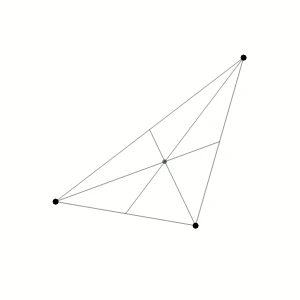
The Three-Body Problem is the central mathematical and existential force of Liu Cixin's universe: the unsolvable task of predicting the gravitational motion of three mutually interacting celestial bodies. In the Trisolaran homeworld, this is not an abstraction but a daily reality—three suns orbit one another in a chaotic dance that renders the planet's climate, seasons, and very habitability fundamentally unpredictable. For millennia, the Trisolaran civilization has been defined by this problem, cycling through brief stable 'clear epochs' and devastating 'chaotic epochs' that repeatedly threaten annihilation.
In the broader narrative, the Three-Body Problem functions as the engine of the entire conflict. It is the reason the Trisolarans look beyond their own star system, the reason they broadcast into the void, and the reason a message sent from a remote radio observatory on Earth ignites a war that will span centuries. It is less a weapon or a tool than a condition of existence—a mathematical law that became a civilizational crisis.
- Type
- Mathematical problem / Civilizational condition
- Origin
- Trisolaran star system (three-sun configuration)
- First referenced
- The Three-Body Problem (novel) by Liu Cixin
- Status
- Fundamentally unsolvable (chaotic system)
- Affected civilization
- Trisolaran
- Narrative role
- Primary driver of interstellar conflict
Lore & Background
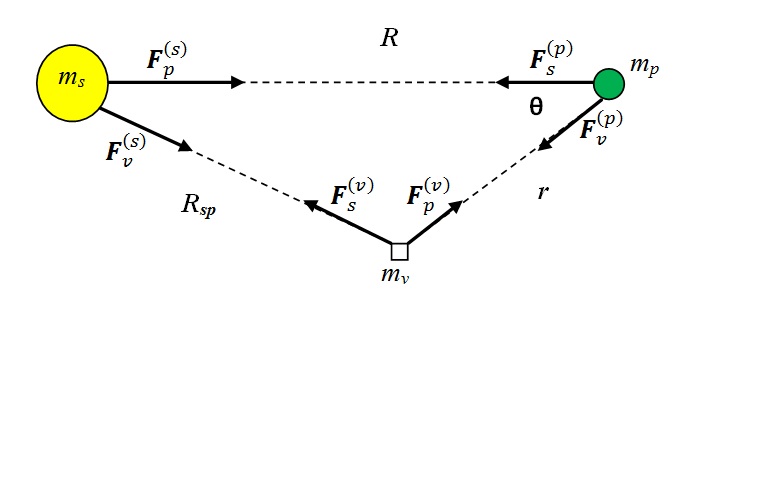
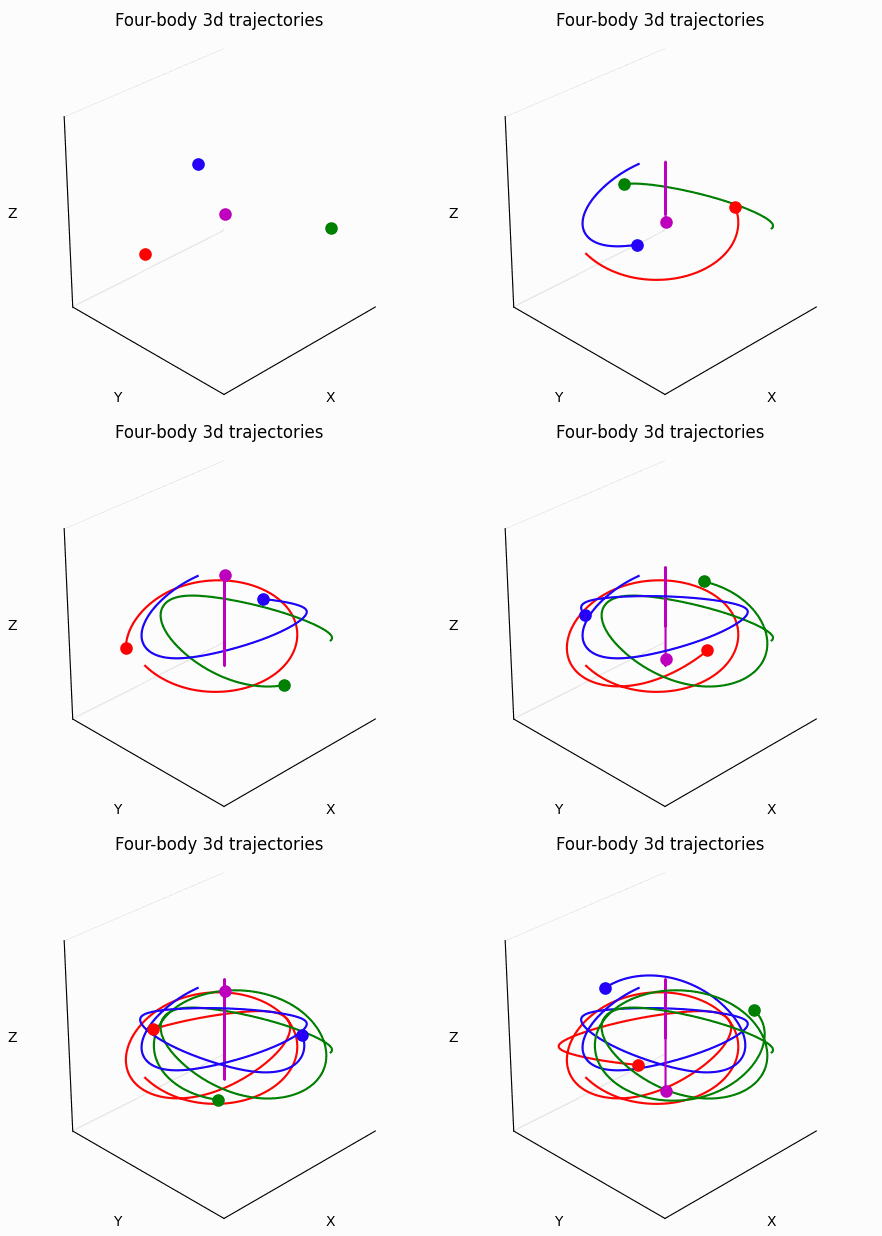
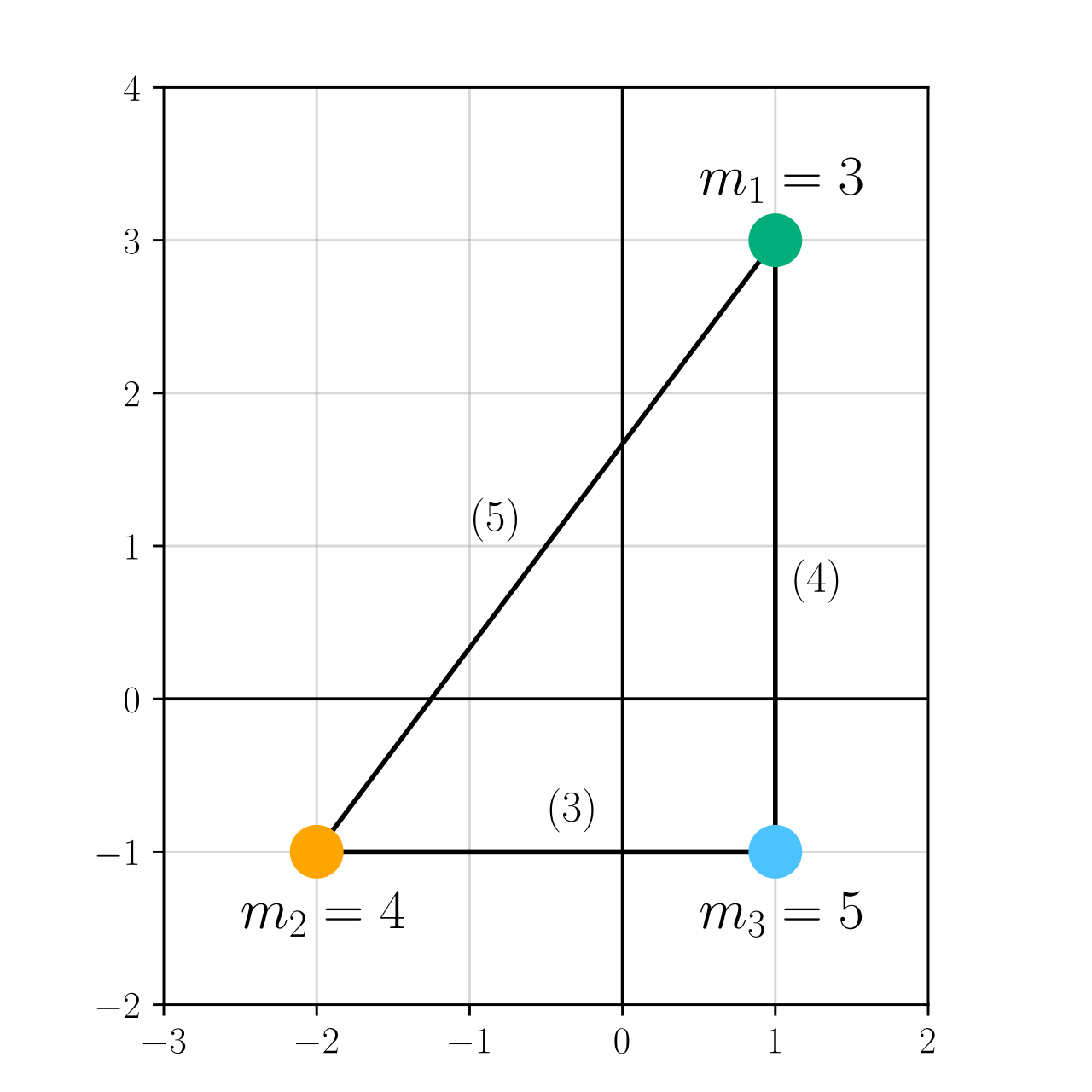
In classical mechanics, the Three-Body Problem asks whether one can determine the future positions of three point masses interacting solely through gravity. Unlike the two-body problem, which yields elegant elliptical orbits, the three-body system is chaotic: infinitesimal differences in initial conditions produce wildly divergent trajectories over time. There is no general closed-form solution. In the Trisolaran setting, this mathematical truth is lived as survival. Their world is bathed in the light of three suns whose orbits never repeat, and the resulting gravitational tugs send the planet into regimes of scorching heat, freezing dark, or brief temperate windows. The Trisolarans call these windows 'clear epochs' and the rest 'chaotic epochs,' and the ratio between them is never guaranteed. Civilizations rise, freeze, burn, and restart, sometimes over and over, each cycle losing memory and technology.
This is not merely bad weather. It is a fundamental constraint on the development of any stable society. Agriculture, architecture, culture—all must be built to be destroyed and rebuilt. The Trisolarans have spent thousands of years attempting to 'solve' their world, to find a stable configuration or a way out. Their solution, ultimately, is not mathematical but navigational: leave. The Three-Body Problem, in this reading, is the problem a civilization cannot solve by staying. It can only be solved by going somewhere else, somewhere with a single, steady sun.
The problem also carries a deeper thematic weight in the narrative. It represents the limits of prediction, the fragility of order, and the way a single additional variable can shatter all assumptions. When the Trisolaran signal reaches Earth, it is not merely a greeting; it is a plea encoded in the language of chaos, a civilization saying, in effect, 'Our universe is too unstable for us. Is yours?'
In Their Own Story
The sky was the color of a bruise, shifting from amber to violet in the space of a breath. Old Kael pressed his palm flat against the basalt of the observation terrace and felt the vibration—three gravitational pulls, each tugging the world in a different direction, the planet groaning like a ship in a storm. To the east, the first sun was rising, a swollen orange disc. To the west, the second was setting, painting the clouds in arterial red. And overhead, barely a finger's width from the first, the third hung in a sickly pale arc, its light thin and cold.
'Clear epoch,' whispered the child beside him, as if naming a prayer.
Kael did not correct her. They never did. You hoped. You counted the days between the last freeze and the last burn, and you told yourself the numbers meant something, that the pattern was one rotation away from repeating. It never was. The three suns did not care about the numbers. They did not care about the terraces, the grain stores, the children learning to read by the light of whichever star happened to be nearest.
He looked up at the third sun and thought, as he always did, about the ones who had looked up before him and simply stopped. The ones who had looked up and decided that the answer was not a better orbit, not a better equation, but a different sky entirely. A sky with one sun. A sky that stayed.
The child tugged his sleeve. 'Uncle, is it clear today?'
He smiled. 'It is what it is, little one. Let us eat before the light changes.'
They ate. The light changed. It always changed.
Reader's Guide
The Three-Body Problem is not a tool you pick up or a spell you cast. It is a condition, a law, a wall that a civilization hits when it has too many moving parts and not enough predictability. In-world, it manifests as the chaotic orbital mechanics of the Trisolaran three-sun system, producing alternating clear and chaotic epochs that make long-term planning, agriculture, and infrastructure perpetually provisional.
How it works: Three gravitationally interacting bodies create a system with no general analytical solution. Tiny perturbations compound exponentially. In the Trisolaran context, this means the planet's axial tilt, distance from each sun, and atmospheric conditions shift in ways that cannot be forecast beyond a short window. Civilizations must be modular, resilient, and ready to reset.
Who deals with it: Every Trisolaran, in every epoch, lives under its shadow. Scientists study it. Engineers design for it. Children grow up knowing their world may freeze or burn within a generation. Ultimately, it is the Trisolaran leadership and their long-range strategic thinkers who 'solve' it—not by fixing the orbits, but by deciding the only stable solution is to emigrate to a single-star system. Earth becomes the proposed answer to a problem that has no mathematical answer.
For the reader or viewer, the Three-Body Problem functions as the thematic spine: the idea that complexity, once past a threshold, becomes unfriendly, and that the only way out of an unsolvable system is to leave it entirely.
Did You Know?
- The Three-Body Problem in physics has no general closed-form solution; it is one of the foundational examples of chaotic systems in classical mechanics, a fact the novel uses as both literal setting and metaphor.
- In the novel, the Trisolaran world's 'clear epochs' and 'chaotic epochs' are not merely weather patterns but full civilizational resets—technology, culture, and memory can be lost entirely between cycles.
- The novel's title deliberately invokes the mathematical problem, framing the entire human-Trisolaran conflict as a consequence of a system that has become too complex to predict from within.
- The concept of the Three-Body Problem in the story is not presented as something that can be 'solved' by a clever equation; the resolution is navigational and existential—finding a new system with a single stable star.
Gallery

More in Powers & Artifacts
Spotted an error? Know more?
This is a living reference — every entry is fact-audited, and reader corrections feed straight into our audit queue. Suggest an edit · See this site's audit record