Trisolaris
A world where the stars themselves are the enemy, and survival means outlasting chaos.

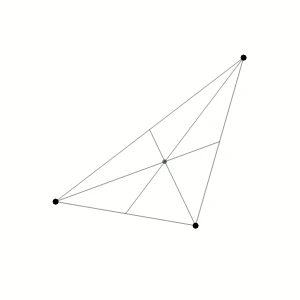
Trisolaris is the home world of the Trisolaran civilization, a planet caught in the gravitational chaos of a three-star system. Because no stable orbit is possible under the three-body problem, the planet lurches between scorching 'chaotic eras'—when it swings close to one or more stars—and frozen 'stable eras'—when it drifts far from all three. This relentless, unpredictable environment shaped every aspect of Trisolaran biology, culture, and technology over millions of years.
In Liu Cixin's trilogy, Trisolaris is the source of the existential threat to humanity. After intercepting a stray signal from Earth during the Cultural Revolution, the civilization decided to send a fleet across the galaxy. To ensure Earth's science could never catch up, they deployed Sophons—protons unfolded into two-dimensional 'smart' surfaces that lock down particle physics and project images directly into human vision. Trisolaris thus functions as both a fascinating alien world and the engine of the story's central conflict.
- Type
- Planet in a three-star (trinary) system
- Gravitational regime
- Perpetually chaotic; no stable orbit possible (three-body problem)
- Climatic cycles
- Chaotic eras (extreme heat, near a star) and Stable eras (deep freeze, far from all stars)
- Technology level at first contact
- Far beyond 21st-century Earth; capable of galaxy-scale engineering
- Signature weapon
- Sophons (protons unfolded to 2-D, used to suppress Earth's physics research)
- First contact with Earth
- Reply to a human signal sent during Earth's Cultural Revolution
- Status in the trilogy
- Invasion fleet en route to the Solar System; Sophons active in Earth's vicinity
Lore & Background
On Trisolaris, the sky never holds still. Three stars—each a sun in its own right—tug the planet along an orbit that can never repeat. One day the world is a roasting desert, rivers boiling, oceans reduced to steam; the next, after a long drift into the void, the same landscape is locked in glacial silence, the atmosphere thin and blue-white. Life on the planet evolved to endure both extremes: organisms that can enter a dormant, crystalline state during the cold and burst into frantic activity during the heat. Culture, too, was forged in this rhythm. Trisolaran philosophy treats predictability as a form of death; their art, science, and social structures all orbit the central idea that the only constant is upheaval.
When a faint radio signal from a small blue planet reached the trinary system, the Trisolarans heard it not as a greeting but as a vulnerability. Their response was swift and total: a fleet built to cross interstellar space, and a campaign to blind Earth's scientific progress for centuries. The Sophons they unleashed are a kind of weaponized mathematics—subatomic particles stretched flat into vast, programmable surfaces that can watch, project, and sabotage. For the Trisolarans, the act was not malice but survival: a species that has spent eons being battered by its own stars simply cannot afford to let a rival grow.
The 'Three-Body' game that later appears on Earth is a window into this worldview. Players who enter the virtual simulation experience the planet's eras firsthand—watching a star devour the sky, feeling the air turn to crystal. The game is, in essence, a Trisolaran self-portrait rendered in light and physics, an invitation to understand a mind that thinks in centuries and measures safety in light-years.
In Their Own Story
The sky cracked open like a wound. Three suns, each larger than the one that had burned the world the last time, hung in a triangle that shifted with every breath of the wind. Kael pressed her palms flat against the basalt and felt the heat climbing through the stone, through her boots, into the marrow. Around her, the settlement was already sealing—shutters slamming, water channels draining into deep cisterns, the great fungal towers folding their fronds tight like fists. A chaotic era. Maybe a day. Maybe a week. Nobody could say; the orbit had no memory, no pattern, no mercy. She looked up at the nearest star, the one that was already eating the horizon, and thought of the small blue world she had read about in the old signal. A world with one sun. One. She envied them with a grief so old it had no name, and then the heat hit the first wall and she was running, because on Trisolaris you do not grieve. You run.
Reader's Guide
**The Trinary System (solar scale).** Three stars of differing mass orbit a common barycenter in a configuration that is mathematically chaotic—no trajectory repeats. The physical rule here is unpredictability: gravitational slingshots fling the planet inward or outward without warning. Narratively, this scale establishes the *why*—the civilization's entire psychology of endurance and strategic patience is a direct product of this gravitational anarchy.
**Trisolaris (planetary scale).** The planet's surface alternates between a scorching, low-atmosphere desert (chaotic era) and a frozen, high-pressure ice world (stable era). Unlike the system's abstract chaos, the planet's rules are biological: life must be able to die and reawaken. This scale grounds the story in sensory, tactile reality—heat, cold, the smell of superheated rock—and gives the reader a place to stand.
**The 'Three-Body' Game (virtual / cognitive scale).** A simulated recreation of the planet, experienced from the inside. Its rules are perceptual rather than physical: the player *feels* the eras, sees the stars move in real time, and can interact with the environment. It differs from 'real' Trisolaris in that it is a curated, almost theological representation—a Trisolaran myth made interactive. Narratively, it is the bridge between alien and human, the tool by which the Trisolarans recruit and empathize (or manipulate) their target.
**The Interstellar / Cosmic scale.** The fleet crossing to the Solar System and the Sophons deployed in Earth's orbit expand the scope to galactic distances and subatomic engineering. The rule here is the Dark Forest logic: in a universe where any signal is a death warrant, the only safe strategy is silence or annihilation. This scale transforms Trisolaris from a single world into a node in a universal ecology of survival, and it is the lens through which the trilogy's final, most terrifying implications are refracted.
Did You Know?
- The three-body gravitational problem has no closed-form analytical solution, which is why the Trisolaran orbit is described as fundamentally unpredictable rather than merely complex.
- Sophons are described as protons unfolded from one dimension to two, turning a subatomic particle into a vast, flat, programmable surface—essentially a 2-D computer etched onto a proton.
- The 'Three-Body' game experienced by human players is not merely entertainment; within the narrative it functions as a recruitment and psychological-influence tool for the Trisolaran cause.
- The first contact was triggered by a human signal sent during Earth's Cultural Revolution, meaning the Trisolaran invasion was, in a sense, a response to a message sent in a moment of political chaos on Earth.
More in Worlds & Cosmology
Elsewhere in the The Three-Body Problem universe
Spotted an error? Know more?
This is a living reference — every entry is fact-audited, and reader corrections feed straight into our audit queue. Suggest an edit · See this site's audit record